

Welcome back to another Mills Nutrients x TB Seeds crossover. The collab that dreams are made from. First, we had to capture the great mind that is The Mills Master Grower. We tracked him down to an Ikea return section covered in meatball sauce. We have since returned him to his natural habitat: the grow room. This time, he wants to talk about late stage flowering, that part of the cycle where growers should be holding their nerve, not losing their minds.
By this late flowering stage, the hard work is already in motion. The flowers should be building, the aroma more present, and the harvest finally starting to feel real. For some growers, this is twitchy bum time, and they get tempted to change feeds or introduce a new ‘wonder’ product, trying to fix something that wasn’t broken.
When late flower kicks in, don’t panic. It is the time to support the finish properly, keep stress low and let the plant close out the cycle cleanly.
That is where timing, restraint and the right support matter. And that support comes in the shape of Doc, the Mills Master Grower. He’s on hand to guide you through late flowering and to show you which Mills product to use and when. Don’t say we don’t look after you, because we hear that a lot from the Doc.
1. Late Flower Is About Finishing, Not Freestyling
By late flower, the plant doesn’t want to change it up; it just wants to get to the destination. It wants an open road to the finish. Some growers might get itchy fingers or start ignoring the feed chart. Stick to the plan, it’s there for a reason.
Late flowering is more about bringing everything together without knocking the plant out of rhythm. If it has come this far in decent shape, your role is not to suddenly become a mad scientist in a grow tent. You know the old adage: if it isn’t broke, don’t ruin your crop trying to fix it.
At this stage, if the plants get stressed, it shows up fast, and it’s not pretty. Leaves discolour, flower growth stunts, and the plant looks like it’s trying to tell you you’re about to undo all the good work. The Mills Master Grower says the same thing, but with less patience and more swearing: if the crop is moving well, let it finish strong.
2. Why Growers Start Meddling Right at the End
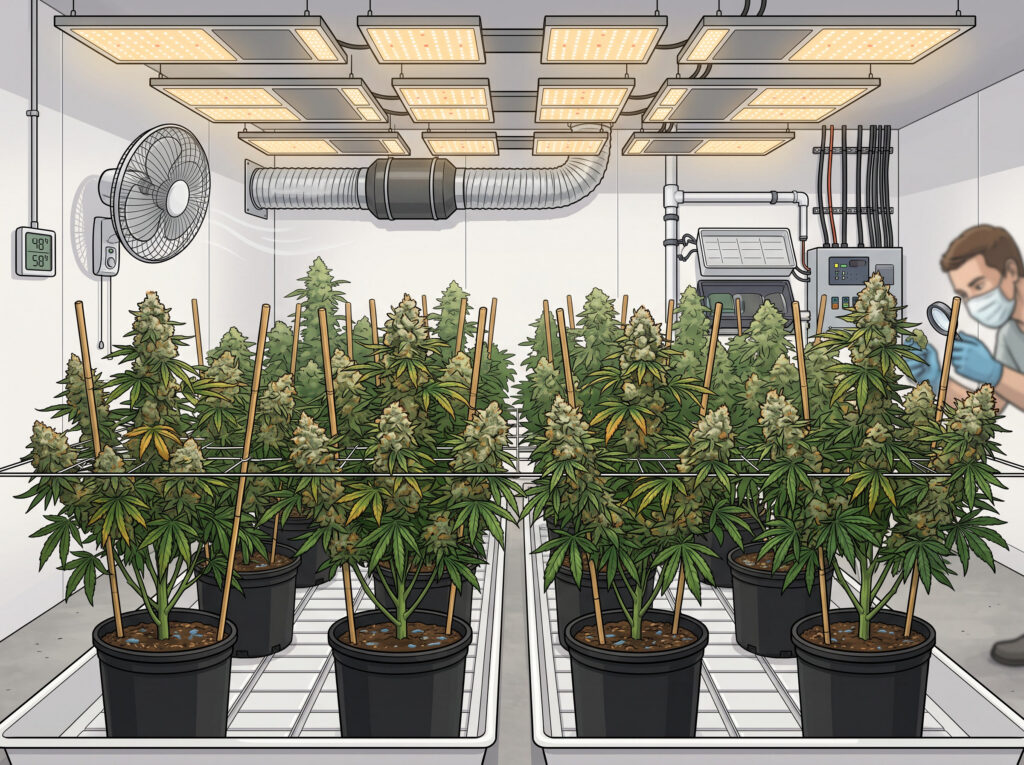
The late flowering stage sends some people over the edge. So much work and patience have gone into getting that far, and the harvest is starting to feel close enough to taste. Yet, as soon as the buds start filling out, some growers can’t resist tinkering. A tweak here or there can stunt your finish. The final stretch needs support and stability, and for the most part, the plant should be left alone. Some growers think more input equals more output, but it usually just means stress and hassle for your plants, at a stage with much less margin for error.
3. Use the Right Support, Not Just More Support
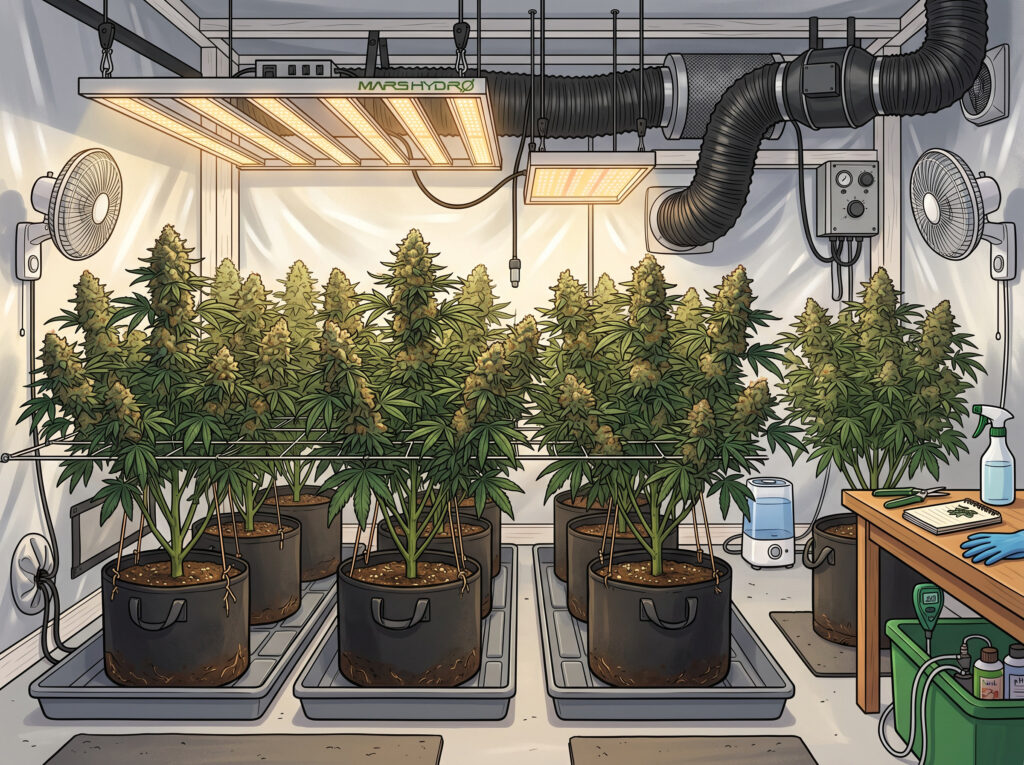
When plants reach late flowering, the right product can either earn its weight in weed, or it can stifle the end of your cycle by getting in the way. Simply utter the words “Ultimate PK” around Doc, and be ready for him to explain in detail why it’s ideal for late flowering. Because at this stage, your plants want a little bit of support, not drastic change, that’s why Ultimate PK, if used properly, can close out the grow cycle without making drastic changes to the feeding schedule.
4. Keep Stress Out of the Finish
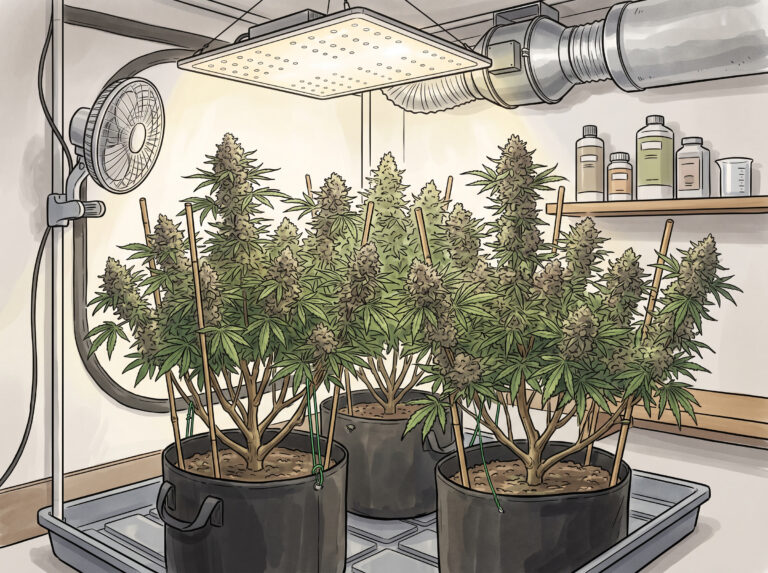
Like when the Doc discovers the cookie tin is empty, late cannabis flowering is not the time to test the patience of your plants. By now, most of the hard bit has been done. The stretch is over, the flowers are stacked, and it’s worked for weeks towards the finish. The last thing it wants is stress. A room overheating or a feeding plan going off schedule.
And like every time we want him to do something, The Master Grower has an answer for this. Mills Vitalize. If the crop stays healthier, stronger and less rattled by stress, it has a much better chance of finishing the way you wanted instead of limping over the line looking like it has seen things.
The Master Grower would put it more bluntly and say late cannabis flowering is not the time to have an identity crisis. Your plants know who they are, even if you don’t. Sit on your hands, put them in your pants, do whatever you need to keep your crop from getting upset.
5. Know What a Strong Finish Looks Like
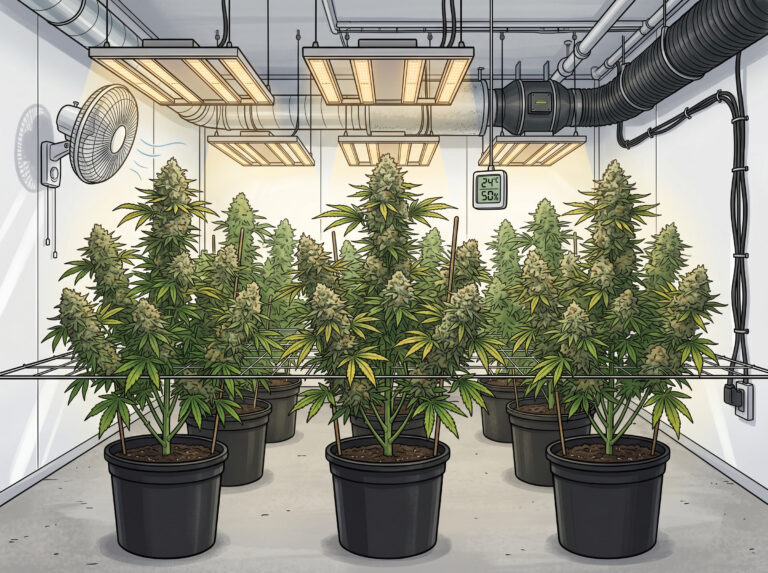
A good finish should not be an Olympic-style photo finish. Nobody needs a cannabis plant flopping over the line through exhaustion. Nor do they want to see their plants throwing one last performance before harvest. What you’re looking for is for the crop to keep its shape as it matures and pushes to the finish line. The plant should look healthy with no signs of stress. Solid structure, good buds and no sign of you trying to participate when you should be in the stands.
The Doc’s view is not complicated (shocker). If the plant looks like it is finishing properly, give it the space to do so. Late-flowering cannabis is about keeping the quality that is already there. At this point, you’ve got what you’ve got. Messing around with feeds or temperature will only create problems.
Final Tokes: Late Stage Flower Management: Finishing Strong Without Stress
This is where growers either finish strong and make the podium or start getting in their own way and face-plant the track. All the plant wants now is to be supported with decent conditions and a grower who can keep their hands to themselves.
That is where Ultimate PK and Vitalize make sense. One helps support the finish when the timing is right, and the other helps keep the crop stronger and less rattled while it gets there. That is the whole game in late flower. Keep things steady, keep stress low, and stop trying to turn the final weeks into a rescue mission.
The Mills Master Grower would probably put it a bit more simply. If the crop is moving well, do not try to get in its path. Let it finish like it means it.