

The Mills Master Grower is back. We found him in the kitchen at The Bulldog HQ and got him back into the grow room to bring you another TB Seeds x Mills Nutrients crossover. At Mills, they call him The Doc; you call him what you want, but be aware, he bites.
The switch from veg to flower should feel as easy as a Sunday morning, yet sometimes, it’s harder than a 9-5. When it’s time to flip the switch, plenty of growers lose momentum. They change too much too quickly. The feed changes, a new light cycle emerges, expectations shift, and then some growers hammer their plants with bloom products. All of which is a good way to slow things down just when your crop should be building pace.
The early flowering stage still asks a lot from the plant. It is stretching, building a structure and setting up future flower sites at the same time. If the base feed gets shaky or the transition is handled too aggressively, the plant usually lets you know one way or another. That is where the Mills Master Grower has got you covered. The Doc will see you now.
1.The First Weeks of Flower Are Still About Growth
This is the bit growers sometimes get wrong. They make the flip to flower and expect the plant to stop growing and start stacking cannabis cup-winning flowers. When the plant is in early flower, it’s still growing; it’s just that the aims have changed. Shortly after the flip, plants begin to stretch, build shape and develop flowering sites. If you go too hard too soon feeding during the bloom, you can knock the whole balance of your crop off kilter before it’s properly got going.
That is why the first couple of weeks after the flip matter so much. The plant still needs stability. It wants a solid base to keep growth moving through the gears. This is not the time to panic and attempt to overcorrect and start pouring in every bloom product you have ever been told will make the flowers explode with THC.
A good transition should be controlled, with a healthy-looking stretch. that has strong tops and good leaf colour. You want to see early signs of flower development without the plant looking like it has just been through a few rounds. If that sounds obvious, good. Growing usually gets harder the moment people stop doing the obvious things well.
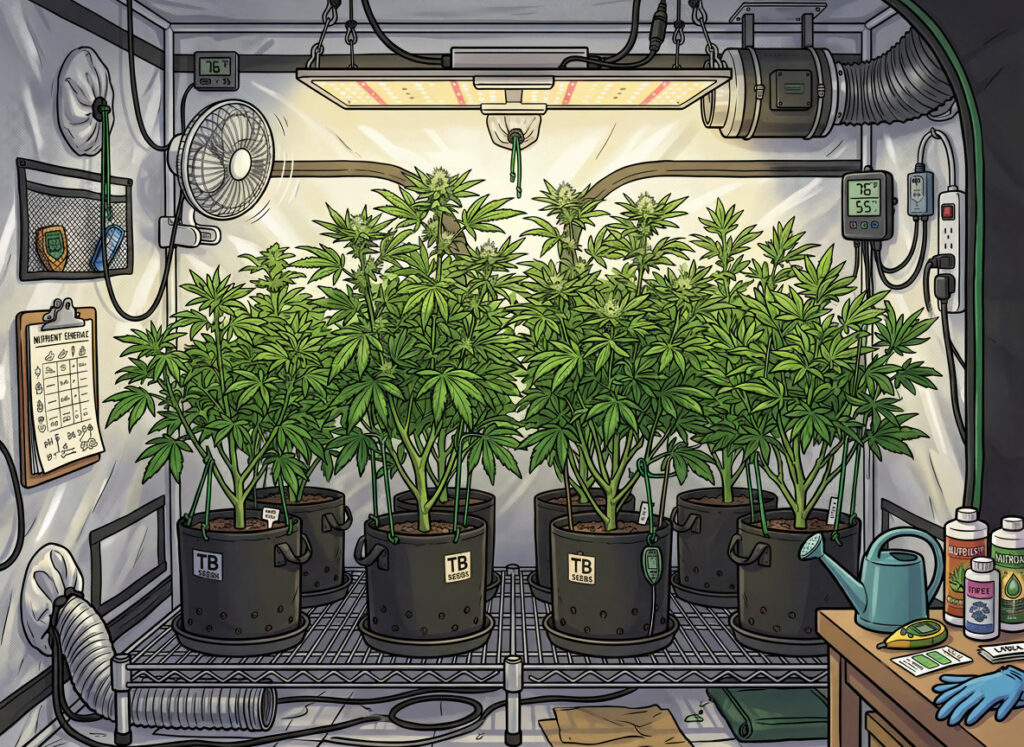
2. Why Growers Lose Momentum at the Flip
Growers do not suddenly forget how to grow. They lose momentum because they change too much at once and expect the plant to keep up. They can lose momentum, though, because they change too many things at once and expect results right away. Some growers might start seeing plant changes that make them nervous and throw the grow book at it.
Many growers also make the mistake of treating early flowers as finished products. They see the flip and start feeding as if the plant should already be focused on swelling buds, when really it is still trying to stretch, build structure and settle into the new phase.
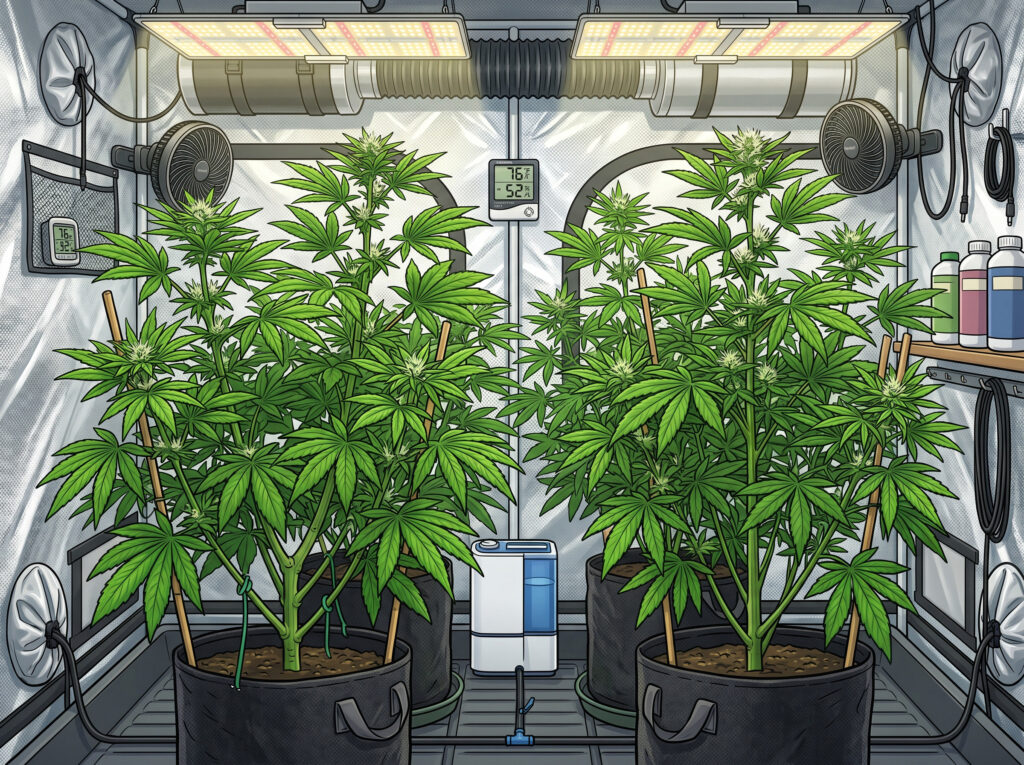
3. Keep things steady
If the transition from veg to flower is going to go well, the base feed must be consistent. As we’ve said, the plant is still growing, still stretching, and still building the structure that will carry the flowers later on. Now (never) is not the time to start guessing.
This is where Mills Nutrients pulls through with Basis A & B to do the steady work. Basis A & B provide the plant with a consistent foundation as it transitions, which is exactly what you want as the crop begins to flower.
This is usually where growers either keep momentum or lose it. A stable base helps the plant move cleanly into flower without the stop-start feel that comes from changing too much too quickly. If the foundations are doing their job, everything else has a much better chance of performing well.
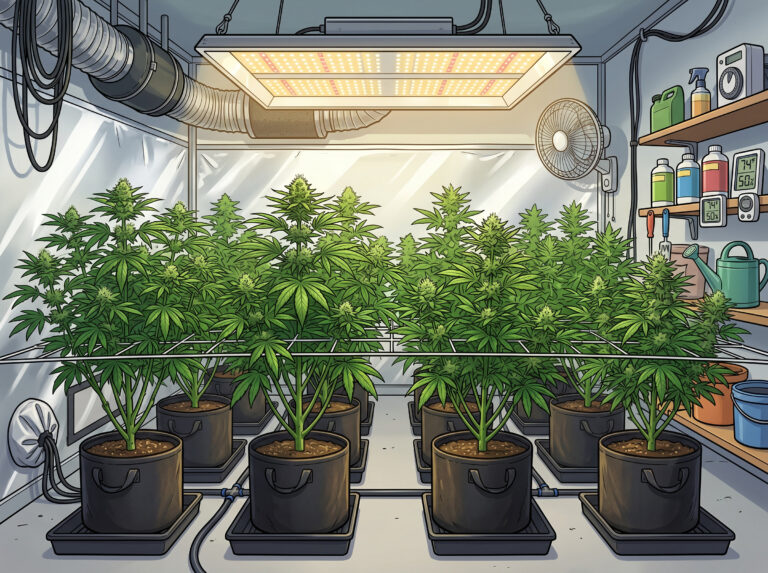
4. Bring C4 In at the Right Moment
C4 works best when the plant is properly moving into flower and ready for a bit of a boost. Get the timing right, and it helps the crop carry on without much stress. Jump in too early, and you are back to changing things for the sake of feeling proactive or to ease yourself in.
The Master Grower says keep it simple by using Basis A & B for the steady work, then bringing C4 in when the plant has actually started to flower. Don’t do stuff for the sake of it. And definitely not because you saw one pistil and you’re dreaming of cutting it down next week.
5. Build the frame
Some growers see early flowers and lose all sense of timing and logic, overthinking every move, and that’s where mistakes are made. Overfeeding your plants with bloom products at this stage will confuse your crop. At this stage, the plant is still about building the frame.
This is not the time to try to impress anyone. The Master Grower did not stand there applauding because you used more product. He is usually muttering something unrepeatable, with a cheese sandwich in hand, while looking at a plant that was doing perfectly well until someone thought it was hungry for the wrong food
6. What a Good Transition Looks Like
Transitioning from veg to flower should see plants stretching but not collapsing under their own weight. The tops develop a solid structure with healthy leaf colour, and the first flower sites should appear without causing crop stress or banging a drum. When things go well, flipping from veg to flower is seamless. The room is stress-free, and the plants meet milestones on time without drama.
Final Tokes: How to Transition from Vegetative Growth to Flower with Mills Nutrients x Bulldog Seeds
The flip to flower is not the time to change everything. It’s called a switch for a reason; you go from one to the other. And like a switch, the principle is simple. It is a handover. Don’t get excited when the plant starts changing. It’s doing what it’s supposed to. That’s why the Mills Master Grower tries to keep things simple, and if you’re unsure, he recommends following a grow chart. Overthinking doesn’t usually lead to better buds.